
More Than Half of U.S. Workers Say Profits Come Before Safety
American workers are sending a clear message to their employers: we don't think you’re doing enough to keep us safe.
A revealing new survey conducted in August 2025 found that the majority of employees believe their companies prioritize profits over protection, while also revealing that workers face threats that employers aren't prepared for. From active shooter scenarios to toxic coworkers, the modern workplace presents dangers that traditional safety programs simply don't address.
We surveyed 1,000 American workers in August 2025 to uncover some of the biggest struggles employees face regarding workplace safety.
Here are the most compelling findings that reveal significant gaps and trends in workplace safety.
Key Findings
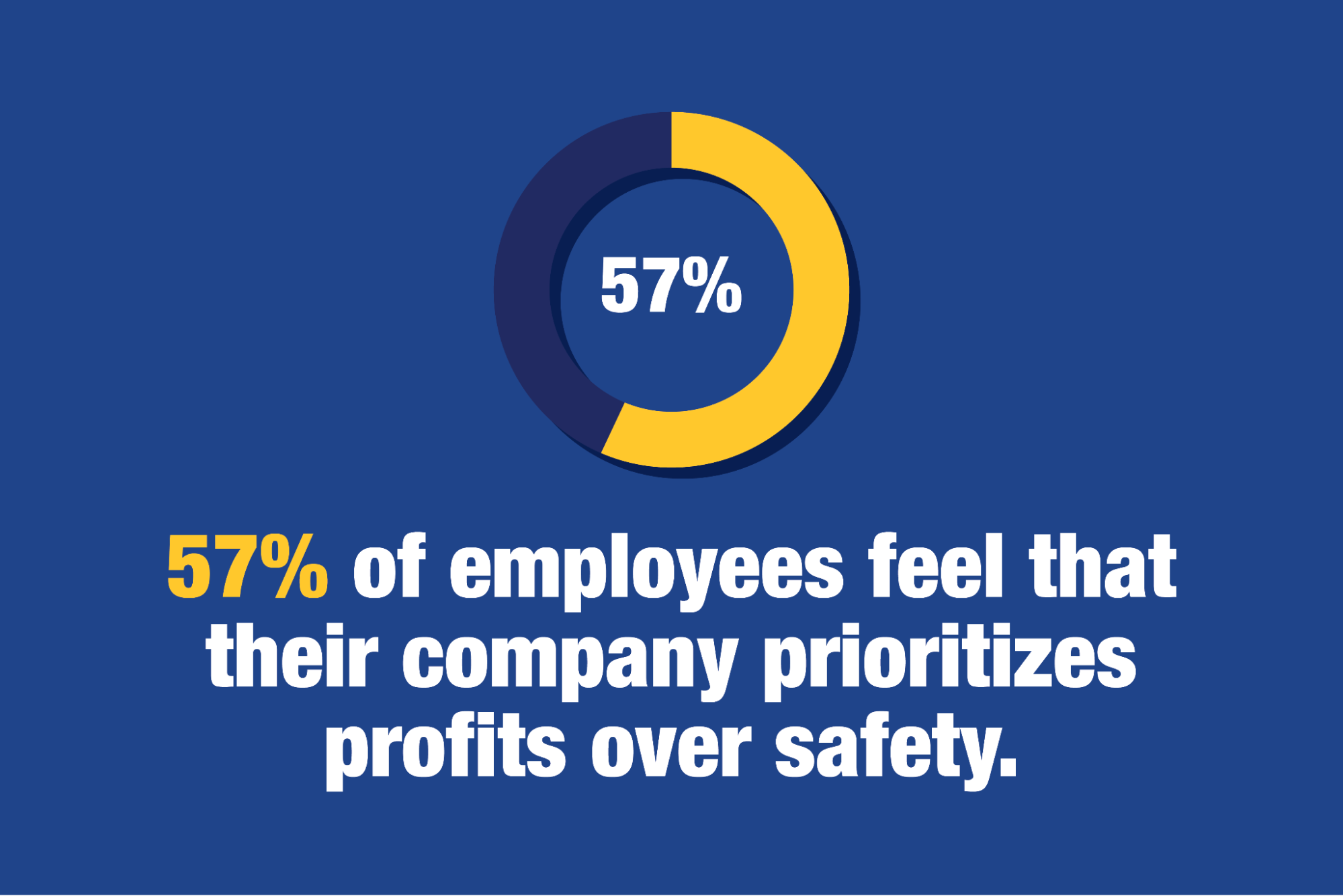
- 57% of employees feel that their company prioritizes profits over safety.
- Mental health is the top safety reason for skipping work.
- 61% of employees feel their employers are unprepared for an active shooter.
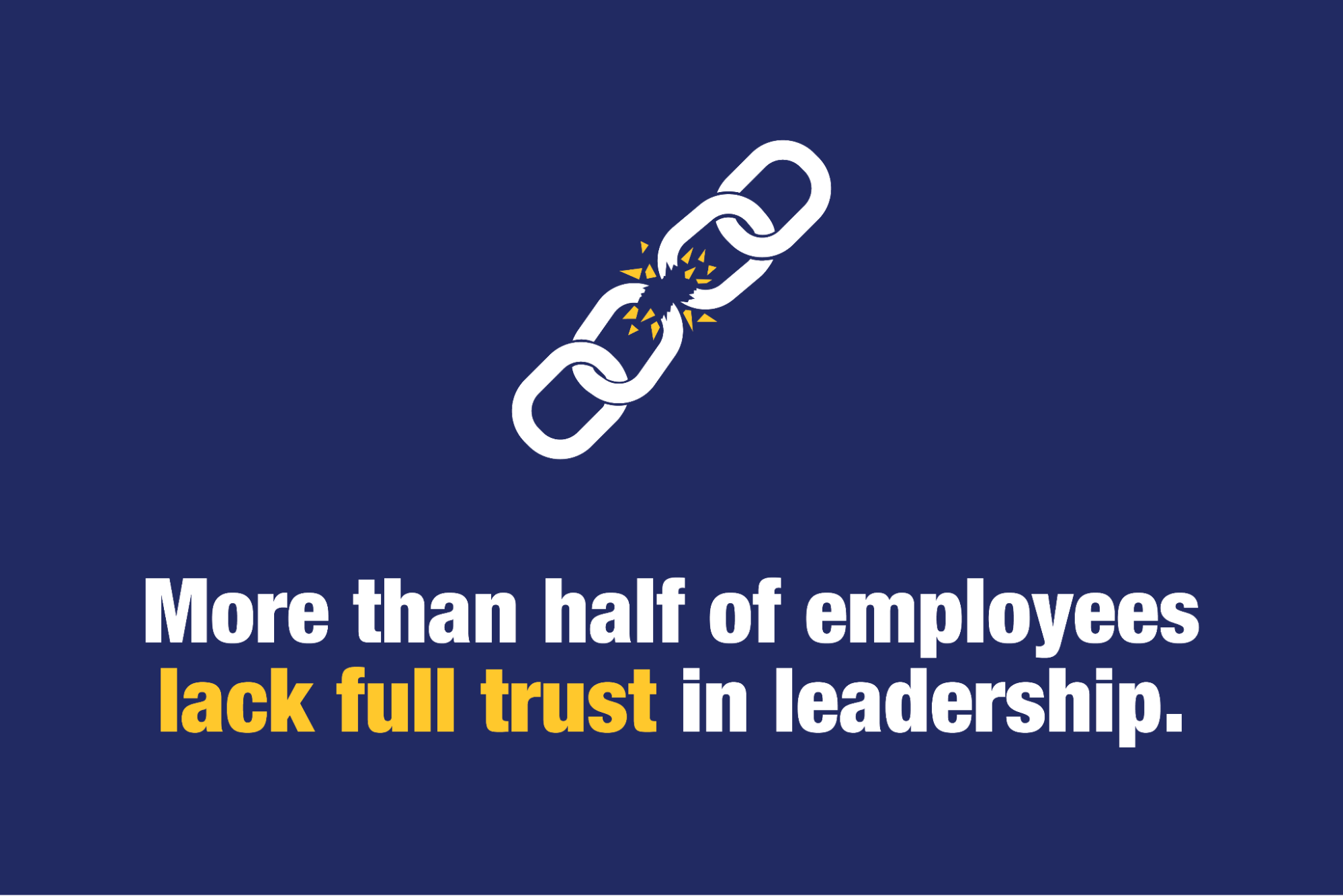
- More than half of employees lack full trust in leadership.
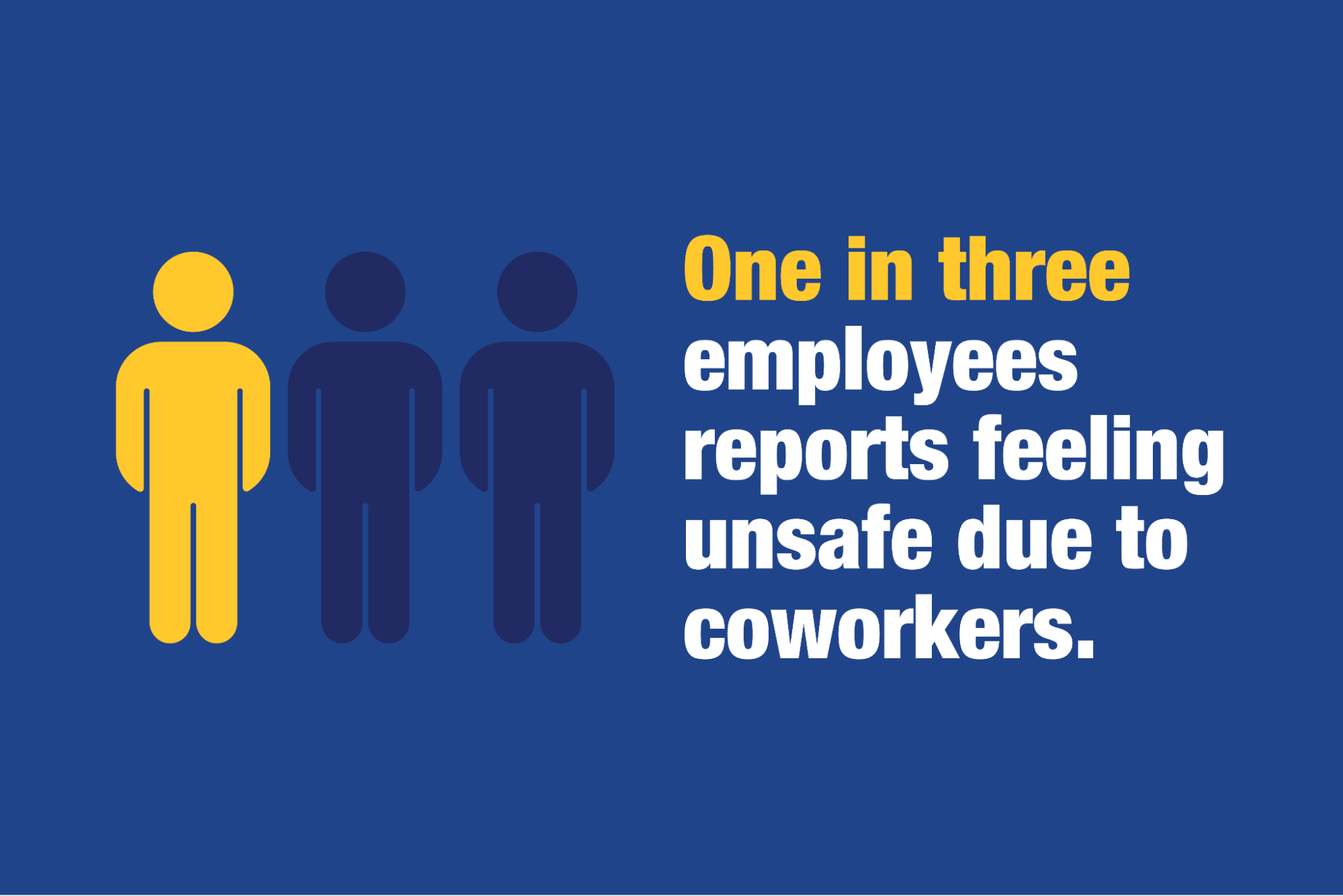
- One in three employees reports feeling unsafe due to coworkers.
57% of Employees Feel That Their Company Prioritizes Profits Over Safety
This widespread skepticism suggests a fundamental trust deficit between workers and management regarding safety priorities, which can undermine safety culture and employee willingness to report hazards.
Mental Health is the Top Reason for Skipping Work
The concept of "workplace safety" has expanded beyond physical hazards.
Mental health strain and burnout were the #1 safety-related reason employees avoided work (18%). This ranked higher than fears of physical violence (10%) or unsafe equipment (9%), showing that safety-based absenteeism includes mental wellbeing.
61% of Employees Feel Their Employers Are Unprepared For An Active Shooter
While most employees feel their company is ready for a fire (74%), confidence plummets for modern threats.
A staggering 61% of workers believe their employer is not adequately prepared to handle an active shooter or violent intruder, highlighting a major gap in emergency readiness for a prevalent public fear.
More Than Half of Employees Lack Full Trust in Leadership
There is a clear confidence crisis in the American workplace.
More than half of all employees (54%) do not "fully trust" their company's HR or leadership to create a safe work environment, with 40% trusting them only "somewhat" and 10% not trusting them at all.
One in Three Employees Feel Unsafe Due to Coworkers
Safety concerns are not just external. 1 in 3 employees report feeling unsafe because of coworkers.
Still, the leading cause of feeling unsafe was threats of violence from customers, clients, or the public (37%), followed by concerns over a lack of physical building security like unlocked doors (33%).
Summary
The survey reveals underlying factors contributing to workplace safety issues. 37% of workers report being burned out or overwhelmed, while 31% feel underpaid or undervalued. Perhaps most telling, only 34% would report safety concerns without hesitation, and 25% say employers don't provide adequate mental health support.
When it comes to job priorities, the survey found that high starting salary ranks as the #1 factor in attracting workers to new employers, while physical safety ranks 5th out of 8 priorities. This suggests that while safety concerns are real and widespread, economic pressures often take precedence in employment decisions.
The data paints a picture of American workplaces struggling to balance productivity demands with worker safety, while failing to adapt safety protocols to address modern challenges, including mental health, interpersonal conflicts, and evolving security threats.
Methodology
To understand how Americans feel about safety in the workplace, we surveyed 1,000 U.S. adults who currently work either entirely on-site or in a hybrid in-person/remote capacity. Participants answered a series of questions exploring both physical safety concerns (such as building security, emergency preparedness, and equipment hazards) and psychological safety (including harassment, stress, and trust in management). The survey also examined how safety perceptions influence job satisfaction, productivity, and interest in emerging safety tools, such as AI. Responses were analyzed by demographic groups, industries, and job types to identify key trends and disparities.
Fair Use Policy
Users are welcome to utilize the insights and findings from this study for noncommercial purposes, such as academic research, educational presentations, and personal reference. When referencing or citing this article, please ensure proper attribution to maintain the integrity of the study. Direct linking to this article is permissible, and access to the original source of information is encouraged.
For commercial use or publication purposes, including but not limited to media outlets, websites, and promotional materials, please contact the authors for permission and licensing details. We appreciate your respect for intellectual property rights and adherence to ethical citation practices. Thank you for your interest in our research.