How might robots and artificial intelligence (AI) impact organizational safety protocols?
There’s been an increasing trend in industrial robot use over the past few decades. In 2004, companies
installed 97,000 robotic units, while projections estimate 518,000 robots will be installed in
2024.
That same year, forecasts by Gartner suggest that 75% of all
businesses and organizations will also use
artificial intelligence (AI) in an operational capacity.
The Occupational Safety and Health Administration (OSHA) points out that one of the main benefits of
robotics in the workplace is that they handle dangerous tasks and take people out of harm’s way.
Through
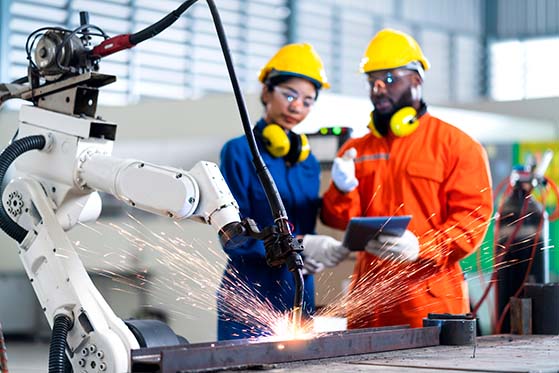
automation, these machines can handle loading and unloading, welding while working in hazardous
environments and other situations that commonly lead to workplace injuries.
According to OSHA, most injuries involving AI-powered machinery take place during maintenance. Lockout
tagout devices can help avoid dangerous situations during maintenance. A ball valve lockout device or an
electrical plug lockout, for instance, can
prevent the machinery from operating until installation or maintenance is completed.
Take a look at how robotics and AI can impact safety and new considerations that these systems bring to
the equation.
Enhancing workplace safety with robots and AI
As OSHA points out, robots can handle tasks with a higher risk of injury. Since they use the same process each
time without fatiguing, automated machinery eliminates risks
associated with human error. Injuries often occur due to changes in a work process brought on by fatigue or distraction — things that can’t happen to robots.
AI can further improve safety by enhancing monitoring and sensing capabilities, continuously analyzing safety
procedures and automating emergency responses.
AI-powered safety monitoring and analysis
Artificial intelligence software and sensors can monitor
processes and employee activities and look for potential anomalies in operations or the environment.
Assessing this data in real time means the ability to alert management immediately or shut down operations until
safety personnel investigate the issue.
AI systems can also crunch huge amounts of data, offering insights into the overall safety performance of
employees. These insights can lead to improvements in procedures or changes to equipment or the work
environment.
Predictive maintenance and accident prevention
While a funny term, the internet of things (IoT) relies seriously on connected sensors to retrieve and analyze
data from equipment and work systems. By constantly monitoring the condition of machinery, AI can give early
warning signs about maintenance requirements based on readings or changes to performance. These early fixes can
help a business avoid accidents due to equipment malfunctions.
AI-powered monitoring can assess performance too, allowing companies to perform maintenance and ensure maximum productivity from
all their equipment.
Improved emergency response
Robotics have long played a role in emergency response. Robots can perform cleanup tasks or assess the situation in an unstable environment while safety experts control them
remotely — another way to keep employees safe.
Meanwhile, sensor-connected AI software can assist with post-accident procedures. Consider a warehouse fire.
Sensors can detect where the blaze is and direct employees to safe exit routes based on real-time data.
Even if there is no disaster, AI’s data analysis can help companies predict events and timelines during a potential
emergency, then put that framework into play when responding to an actual crisis.
The need for new safety protocols
Robotics and AI can make workplaces safer, but they require adjustments to existing worker protection protocols.
One of the most important aspects of safety in a workplace with robotic equipment is to notify employees of
potentially dangerous equipment operations. This effort may include placing signage or other markings to
notify
employees of potential dangers or using locks and physical barriers to keep people out of operational areas.
As OSHA pointed out, robotic maintenance and work within equipment operation areas are common causes of
accidents. A comprehensive lockout tagout program with lockout tags, for visual cues, and safety padlocks can
protect against this danger.
Finally, employees will need to practice AI-enhanced evacuation and emergency response procedures so that they
know how to interact and respond to these systems if an actual crisis occurs.
Collaborative robot safety
Many robots are not 100% autonomous, since they perform specific tasks alongside humans. These so-called “cobots”
are designed to work on more complex tasks that require human management instead of programmed repetition. For
instance, cobots can assist with repairs that require a human for assessment and problem-solving.
Because cobots perform different tasks, companies should perform
a risk assessment to define dangers associated with the system. They can then take steps to limit these
hazards. Safety options can include installing a monitored stop system or sensors that detect humans within an
unsafe range and shutting down the robot immediately.
AI bias and ethical considerations
Bias is an ongoing
issue in AI. Software responsible for safety and operational monitoring within a company runs based on
data collection and pre-programmed algorithms. It acts based on inputs and isn’t able to consider the ethical
implications or bias of its decisions.
Bias could be as simple as sensors triggering a shutdown because the system does not recognize someone with
mobility issues or failing to register someone because of skin tone, height, weight or other factors.
Other workplace issues include collecting data on private interactions or from activities unrelated to safety or
performance.
AI systems require human
assessment and testing to ensure they function the same for all staff members.
Employee training
The safety of robotic equipment and AI-powered systems also depends on employee awareness. Workers need training
so that they know how to
react to these new workplace systems. These efforts could be as simple as educating employees about
signage and lockout tagout systems and running drills to ensure proper response to AI-powered emergency systems.
Those who operate, repair and maintain the equipment need additional training on how to safely work on automated
equipment and properly use safety systems. Ideally, training and assessment of safety procedures occur before
the new systems are used in daily operations.
Legal and regulatory frameworks
Legal and regulatory frameworks for the use of robotics and AI are complex. Just because there’s a robot involved
doesn’t mean there’s not an impact on people. Basic laws, such as those requiring safety
signage apply to the
use of robots if contact between machines and employees could prove dangerous.
At the same time, issues related to privacy and fairness are not well defined, and regulations depend on
definitions and classification of systems and precedents set by court decisions. Companies can abide by existing
workplace safety and privacy laws and be proactive in ensuring their robotics and AI systems are thoroughly
tested for safety and bias.
Continuous evaluation and improvement
AI, autonomous equipment and worker-controlled robots are evolving quickly with innovations and breakthroughs
happening frequently. Something as simple as a new software update can alter the safety protocols for an
automated system. Companies should constantly assess new products, systems and updates to see if they can
improve safety.
Getting started with AI and robotics in safety
The increased use of AI and robotics is impacting a variety of industries and careers – and occupational safety
is no different. When evaluating the impact AI and robotics could have on your operations, consider which areas
of your operations would benefit from automation. Are there simple or repetitive tasks that pose significant
safety risks? Are there gaps in your safety data that AI monitoring could fill? These are great places to start
in the early stages of implementing AI into your safety program. Once implemented, safety managers can use
increased data capture to assess safety performance and continue to make impactful changes that increase overall
workplace safety.


